Willy Loman
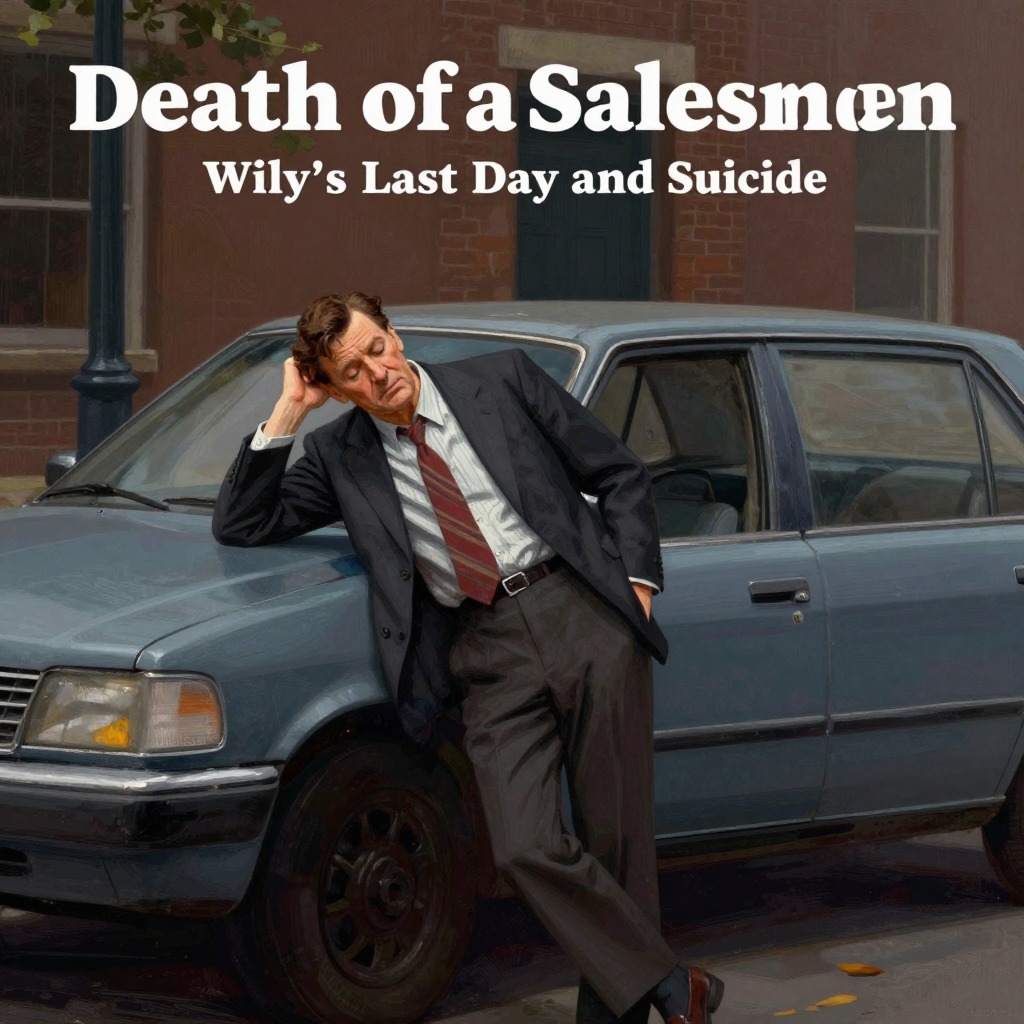
Willy Loman, a sixty-three-year-old traveling salesman, is the protagonist of Arthur Miller's Death of a Salesman. He is a man defined by a single, consuming belief: that personal success flows from being "well liked" and that the American dream of material prosperity is an inevitability for those who possess the right personality. This faith, however, has become a cage. Exhausted, bewildered, and haunted by a past he can neither escape nor understand, Willy returns home from a failed sales trip, his mind unmoored, his sense of self crumbling. The play traces his final twenty-four hours, a period in which the gap between his cherished illusions and the brutal facts of his life becomes an unbridgeable chasm, leading him to a final, desperate act intended to secure the legacy he could never achieve while alive.
Identity and Background
Willy Loman is a man of contradictions, a "bleeding mass of contradictions" as Miller described him. He is a salesman for the Wagner Company, a firm he has served for thirty-four years, yet he is now reduced to working on straight commission, a fact he hides from his wife, Linda, by borrowing fifty dollars a week from his neighbor, Charley. He is a man who built his own house, a house he once loved, but which is now hemmed in by towering apartment buildings that block the sun and kill the trees. He is a father who idolized his eldest son, Biff, as a "young god" destined for greatness, yet he is now locked in a bitter, bewildering conflict with him. His own father, a flute-maker and salesman, abandoned the family when Willy was a small boy, leaving him with a profound sense of being "kind of temporary about myself." This early abandonment, coupled with the dazzling example of his older brother, Ben, who walked into the African jungle at seventeen and emerged rich at twenty-one, forged in Willy a relentless, almost religious, devotion to the idea of success as the only measure of a man's worth.
Arc Through the Plot: The Last Day
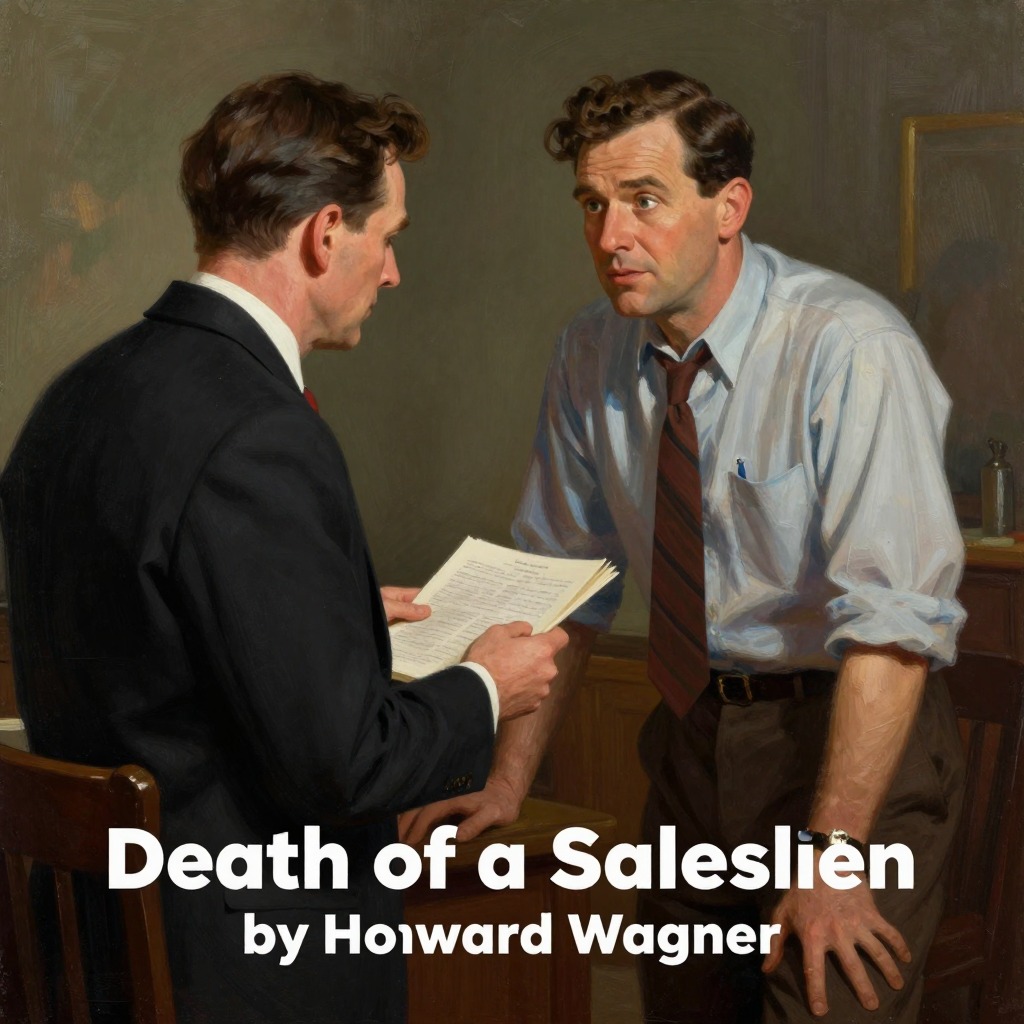
The play's action unfolds over a single day and night, but Willy's mind moves freely through time. The present is a series of humiliations: he cannot drive without nearly crashing, he is fired by his young boss, Howard Wagner, who dismisses him with a cold "business is business," and he is abandoned by his sons at a restaurant after a disastrous dinner. Each present failure triggers a memory, a "daydream" that Willy reshapes to serve his immediate psychic needs. He recalls the idyllic past when his sons polished his car and looked up to him, when he was a successful salesman with "important contacts," and when Biff was the star of the Ebbets Field football game, a moment that represented the pinnacle of Willy's hopes. But these memories are not accurate flashbacks; they are constructions, and they inevitably curdle into scenes of betrayal: the moment Biff discovered Willy's affair with The Woman in a Boston hotel room, an event that shattered Biff's faith and, in Willy's mind, ruined his son's life. The plot is not a linear sequence of events but a spiral, as Willy's desperate search for the moment his life went wrong only tightens the noose of his despair.
Key Actions and Objectives
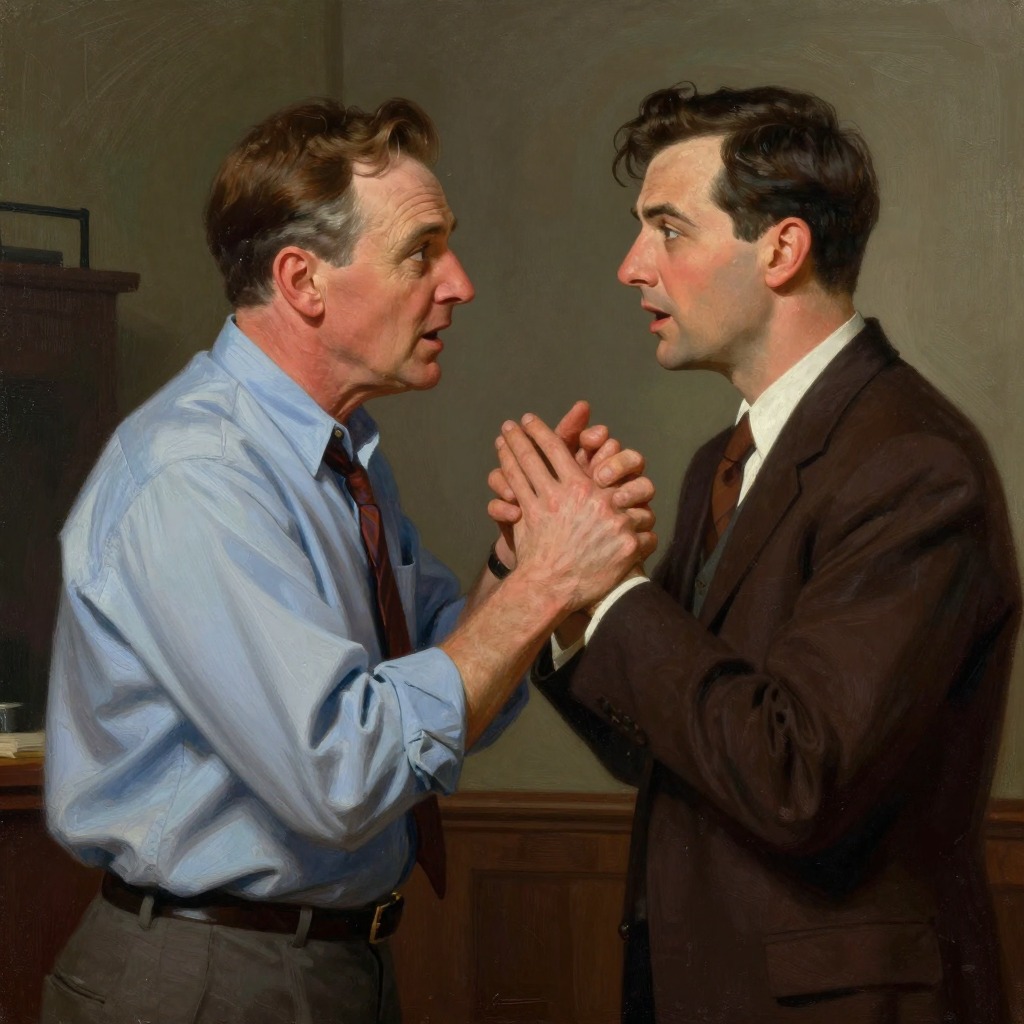
Willy's primary objective is to secure a meaningful future, both for himself and for Biff. He believes that if Biff can land a business deal with his former employer, Bill Oliver, it will retroactively justify all of Willy's sacrifices and prove that his philosophy of life was correct. To this end, he coaches Biff on how to behave: "Walk in very serious. You are not applying for a boy's job. Money is to pass." He simultaneously seeks a desk job in New York from Howard, pleading for a salary of just sixty-five dollars a week. When both efforts fail, his objective shifts to a more radical, final solution. He plants seeds in his barren garden by moonlight, a futile gesture of hope, and he negotiates with the ghost of his brother Ben, weighing the "twenty-thousand-dollar proposition" of his life insurance policy. His final action is to drive his car deliberately into an accident, staging his death as a grand, well-attended funeral that will finally prove to Biff that his father was "known" and "well liked."
Relationships and Conflict
Willy's most significant relationship is with his son Biff, a bond Miller called the play's central "love story." Willy sees Biff as his "ace in the hole," the living proof that his values are correct. But Biff has come to see his father as a "fake" and a "phony little fake," a man whose grand promises were built on a lie. Their conflict is a struggle for survival: Willy needs Biff to embrace his dream, while Biff needs to break free from it to find his own identity. With his wife, Linda, Willy is both dependent and cruel. She is his "foundation and support," yet he bullies her, silences her, and is shamed by her mending of stockings—a direct reminder of the stockings he gave to his mistress. His relationship with his neighbor Charley is a study in contrast. Charley, a man of few words and practical success, repeatedly offers Willy a job, an offer Willy refuses out of pride and jealousy. Charley represents a version of the American dream based on hard work, not personality, and Willy cannot bear to accept help from a man he considers beneath him. His brother Ben is less a character than an embodiment of the ruthless, amoral success that Willy both admires and fears. Ben's mantra—"when I walked into the jungle, I was seventeen. When I walked out I was twenty-one. And, by God, I was rich!"—echoes through Willy's mind as a taunt and a promise.
Change and Ending
Willy undergoes no conventional tragic recognition. He does not come to understand the true nature of his failure. Instead, he experiences a final, devastating reversal. In the climactic confrontation at home, Biff breaks down, sobbing, and tells his father, "I'm nothing, Pop. Can't you understand that? There's no spite in it any more. I'm just what I am, that's all." This moment of raw, unguarded love from his son is misinterpreted by Willy. He does not hear Biff's acceptance of his own limitations; he hears proof that Biff still loves him. This love, he believes, will now fuel Biff's greatness. "That boy is going to be magnificent!" he cries. This misreading is the engine of his suicide. He rushes out into the night, convinced that his death—and the twenty thousand dollars in insurance money—will give Biff the capital to become the success Willy always dreamed of. The play ends with his funeral, a sparsely attended affair that shatters his final illusion. Linda, left alone at the grave, cannot understand why he did it, murmuring, "We're free and clear," as the hard towers of the apartment buildings rise around her.
Thematic Significance
Willy Loman is a quintessentially American figure, a true believer in a dream that has betrayed him. He is not a victim of a single villain but of a system of values that equates personal worth with material success. His tragedy lies in his inability to see the love that is offered to him—by Linda, by Charley, and ultimately by Biff—because he is blinded by a definition of success that makes him feel worthless. As Charley says at the funeral, "A salesman is got to dream, boy. It comes with the territory." Willy's dream was not wrong in its desire for meaning, but it was wrong in its object. He sought a diamond in the dark jungle of commerce, when the real treasure—human connection—was already in his hands. His story is a powerful critique of the American dream's dark underside, a reminder that the pursuit of a phantom tomorrow can destroy the value of today.